When patients come to me wanting straighter teeth, the first question I ask is: what do you want the end result to look like? Not just straight, but what kind of smile?
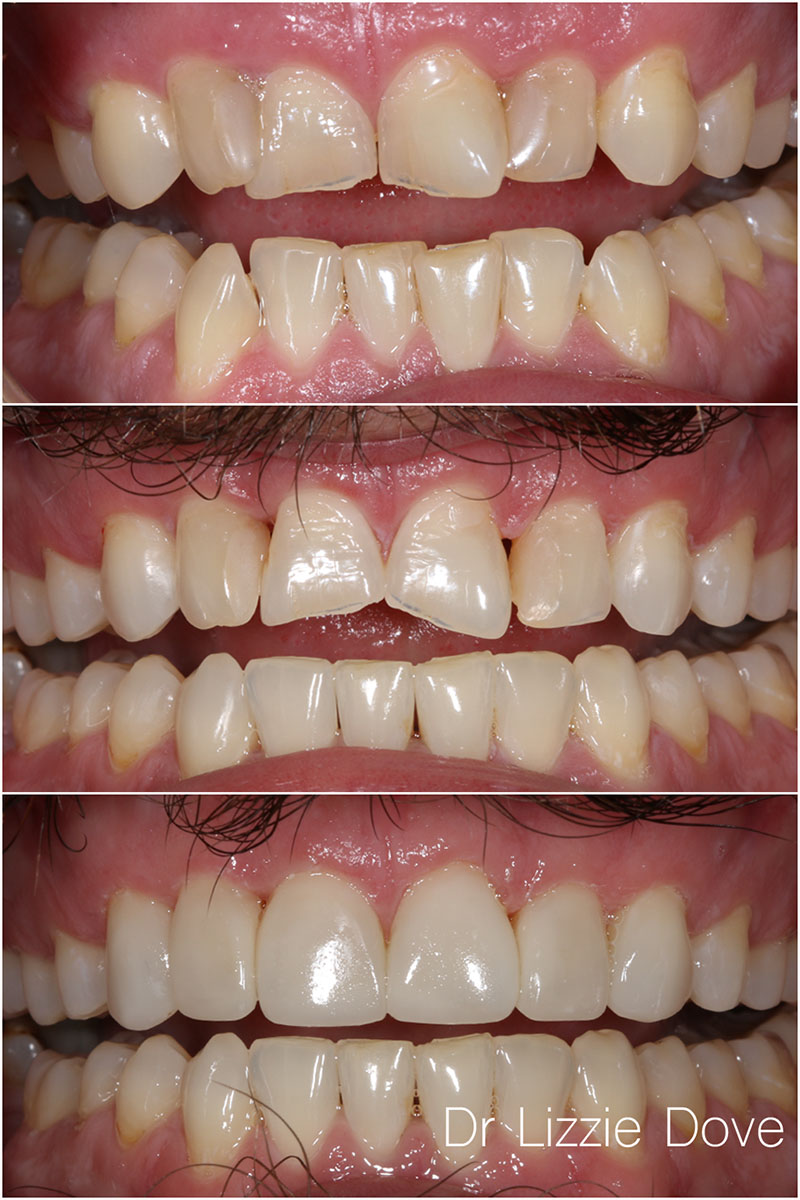
It sounds like a simple question, but the answer changes everything about how I plan the Invisalign treatment. And it's something that I think separates genuinely aesthetic Invisalign from simply moving teeth from A to B.
The problem with planning alignment in isolation
Here's what often happens when alignment is planned without thinking about the final appearance of the teeth: a patient completes Invisalign, their teeth are straight, and then they notice things they didn't notice before. Worn edges. Uneven lengths. Teeth that look short, or wide, or slightly flat. Proportions that feel off.
These aren't new problems, they were always there. But when teeth are crowded, the imperfections are less visible. Once straightened, they stand out.
The difficulty is that if restorations like composite bonding or veneers were never planned into the Invisalign treatment, there may now be insufficient space to do them properly. The teeth ended up in positions that didn't account for what needed to happen next. Aesthetic compromises have to be made.
Planning the end point first
My approach is to work backwards. Before I begin planning the Invisalign ClinCheck (the digital treatment plan that maps every tooth movement), I determine what the teeth need to look like at the end, including any restorations that will be placed afterwards.
This changes where each tooth ends up. For example:
- If I know composite bonding will be added to the edges of the front teeth to restore length lost to wear, I need to plan space for that material, which means positioning the teeth slightly differently than I would if I were only thinking about alignment
- If lateral incisors are undersized, I can deliberately create space beside them during Invisalign so that composite bonding can build them to ideal proportions afterwards
- If I know I'll be placing veneers, the final tooth positions need to account for the planned veneer thickness so the result doesn't look bulky
A real example
I treated a patient whose upper and lower front teeth were biting end to end. This edge-to-edge contact had caused significant wear, the teeth were short and flat, and the smile looked aged even though the patient was in their 30s.
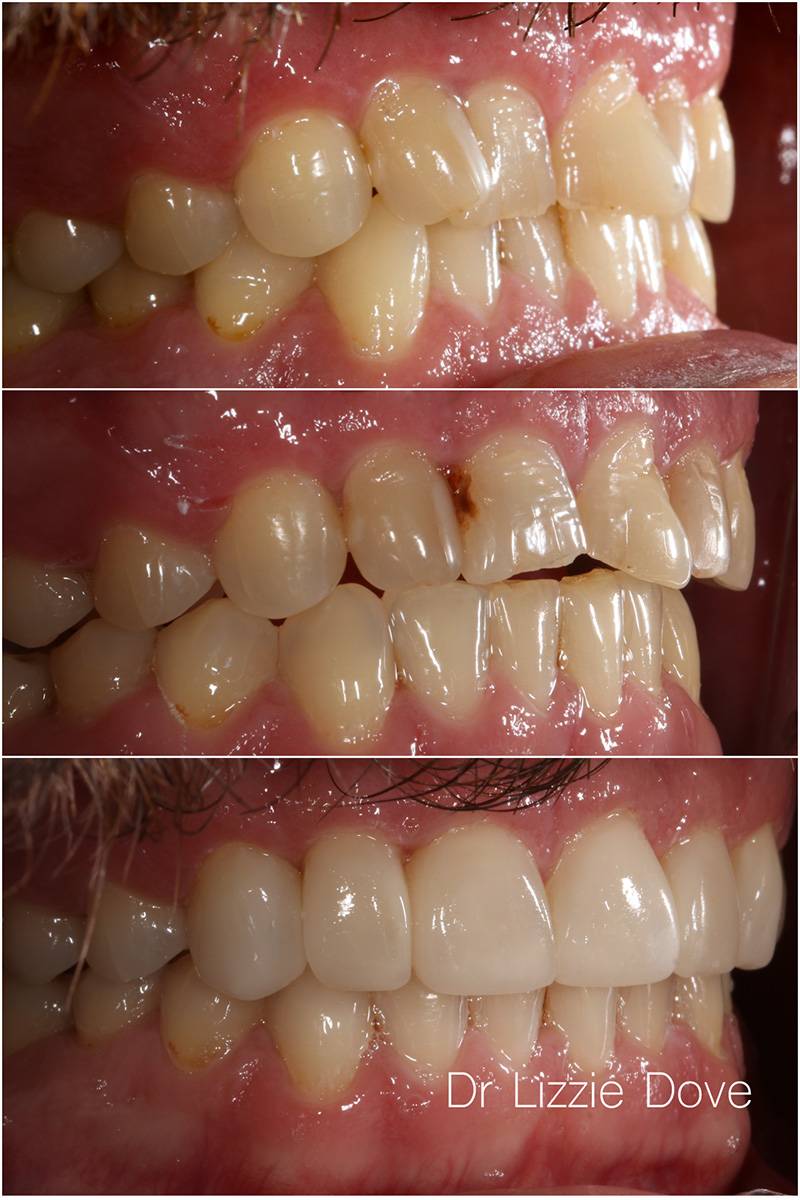
If I had purely straightened the teeth, the wear would have become more obvious. Instead, I planned the Invisalign treatment to move the upper front teeth upward, creating space to add length with composite resin afterwards. I also planned the lower front teeth to be moved further down than simply level, so composite could restore the structure that had been worn away.
The final result wasn't just straight teeth, it was a complete aesthetic change, achieved without veneers, using minimally invasive composite bonding that would not have been possible without the Invisalign positioning being planned the way it was.
Does every Invisalign patient need restorations afterwards?
No, some patients have healthy, well-proportioned teeth that simply need to be in better positions. In those cases, Invisalign alone achieves a great result. But for many patients, especially those with any history of wear, older teeth, or teeth that have always been slightly irregular in shape, thinking about the full picture from the start produces a meaningfully better outcome.
This is something I assess at every Invisalign consultation, and it shapes how I plan treatment from day one.